click on the home button to go to the home page
|
The Industrial Era 1994 -1995 Internet
is the new hype in computer world. Companies are converging towards
Internet business and building applications for it. Multi Media machines are becoming a de facto standard Since the material shown here is not yet of historic value, seeing the time that elapsed since 1994. The editors felt to display in this and the next chapters the new trends in computing. |
pre history | antiquity
| pre industrial era | industrial
era
| 1947 | 1949 | 1950 | 1952 | 1955 | 1958 | 1961 | 1963 | 1965 | 1969 | 1970 | 1972 | 1974 |
| 1976 | 1978 | 1980 | 1981 | 1982 | 1984 | 1986 | 1989 | 1991 | 1993 | 1994 | 1996 | 2000 |
| 2002 | 2005 |
| Related Articles |
| Related Resources |
|
|
 The Internet has grown to more
than 25 million users.
The Internet has grown to more
than 25 million users.
Due to this massive influx, conflicts arise between the old and new users. The old users are best described as from the scientific world, the hackers scene or users who use the net for professional purposes. The new users were characterized by not obliging to the 'netti-quette', a set of undiscribed rules which every user should adhere to. They are corrected by the Internet community by means of the so-called "flames" (hate-mail") in which the addressee will be made clear what he/she did wrong.
Many companies are starting to use the net as a cheap way to advertise. Other companies are using the net to keep in touch with their clients and give support via the internet. Every year the Internet doubles in usage and users. Not all countries do have access to the net. The Net approaches more or less the Super Information Highway as was meant by Vice President Al Gore and his advisors.
A well publicized case of net pollution, later this use of the internet will be called SPAM, is the case "Canter and Siegel", a law firm in the USA which used the net to advertise practically to all users of all active BBS's of the net. In their advertisement they tried to obtain customers for the application of a Green Card" (a permit for foreigners to stay in the USA). The reaction varied from flames to uncalled subscriptions on tens of magazines, meters of blank faxes and a program of a Norwegian programmer who developed the mechanism of Cancelbot. Cancelbot is a program which erases all e-mail of this firm on any computer before it can reach the user.
recommended reading: Bots from Andrew Leonards
Microsoft, at this moment the
largest software producer on the world with annual sales of over 4 billion US$,
is forced by the American Federal Court to change its code of conduct for marketing.
The founder and chairperson of Microsoft, Bill Gates, promises to remove the anti competition clauses from contracts with other software makers. And an improved separation between the software developers for the Window environment and the developers for applications. This will weaken the monopolistic position that Microsoft holds and that is exactly what the federal court wants.
Doom
one of the first multilevel multi player shoot 'm up games displayed in realistic
3D.
The development started two years earlier by John Carmack when he developed a 3-D game engine: the Doom engine. Tom Hall writes the scripts also called the "Doom Bible", levels are designed by John Romero and Sandy Petersen. The graphics, by Adrian Carmack, Kevin Cloud and Gregor Punchatz, the sound track by Bobby Prince.(6)
Given the technology of this time period, and the technical possibilities for the personal computer platform, this is the most sophisticated game available. While being very popular the next few years with an enormous offspring of other shooting games, Doom is controversial because of the agressive and violent nature it displays.
Half way this year it seems
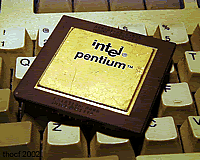
that the Pentium processor has a design flaw in its multiplication tables.
Not all divisions and multiplications are correct. In the beginning Intel tries to play down or even ignore the complaint by announcing only mathematicians could prove this error. In November, IBM and Compaq are quitting the sales of Pentium computers to increase pressure on Intel. That company still bagatelles the problem, the error only shows once every 27.000 calculations. The increasing pressure Intel finally complies to replace those processors for users who do computation related work. Through this Intel lost almost all its goodwill and many users are changing to other platforms (Alpha and DEC to the PowerPC from the Apple/IBM/Motorola consortium). Big computer manufacturers are looking seriously to replace CPU's with those from AMD and Cyrix.
In December Intel admits the error fully and replaces all offered processors with errors, but it looks like a little too late for this giant.
First Internet bank opens. First
Virtual, the first online bank, is launched. (10)
Netscape
founded.
Marc Andreesen, a recent University of Illinois graduate, and Jim Clark, founder of Silicon Graphics, team up to form Netscape. The pair initially call the company Mosaic Communications, after the free Web browser that Andreesen helped write and distribute over the Internet in 1993, but change the name based on legal objections. The company goes public in August 1995 and will be purchased by America Online in 1999. (10)
Yahoo launched.
Stanford University doctoral students Jerry Yang and David Filo begin compiling an online database of Web sites as a personal hobby. They post the database on a Stanford Web server. By 1995, heavy traffic forces them to relocate the site to servers at Netscape. The company goes public in 1996. (10) |
 |
Gary
Kildall dies.
On July 6, Gary Kildall, inventor of an early personal computer operating system, dies at a biker bar in Monterey. (there are different stories on how Gary Kildall died see his bio) Before the development of the IBM PC and the dominance of MS-DOS, almost all personal computers ran on CP/M, Kildall's operating system. In 1980 Kildall rejected an offer from IBM to license his operating system to run the new IBM PC. Instead, IBM bought a simple operating system from Bill Gates for $50,000, ensuring Microsoft's future (10)prosperity.
World Wide
Web Consortium founded (December)
 |
The newly formed World Wide Web Consortium holds its first meeting at
M.I.T. in Cambridge, Massachusetts. The group, which chooses Web inventor
Tim Berners-Lee as its first director, is an international association to
promote common protocols on the Web.(10) |
The
first to write about viral marketing is Douglas
Rushkoff in his 1994 book "Media
Virus."
Viral marketing is innocent in the way it does not destroy your data or hardware. VM is based on that if an advertisement is received by a user, via email or from a web page, this user will become 'infected'.
The user can then infect other users by either forward the link or by sending the contents - a movie, image or text- via email. See below for some methods of spreading. VM works on the principle that if a user 'infects' more than one other user the item spreads exponentially. It is a low cost way to advertise, the targeting is very precise. Since it follows a single 'friends network' trail of people possibly interested in the subject an extreme hit rate is evident.
Methods of spreading (9)
- Pass-along - send to a friend
- Incentivised viral - a reward is given
- Undercover - nothing is visibly marketed
- Gossip/Buzz marketing - ads or messages that create controversy
- User-managed database - users using their own mailing lists
- Web - links on a page
- E-Mail - forwarding url
- IM - just while chatting, a form of plugging
- Forum Discussions - plugging
- Social Bookmarking - using your social network
- Reward for Referrals - offering a cent for each 100 clicks
- Bluetooth - when your BT connection is open to anyone
- Blog Publicity - plugging it in your own blog


Leonard Adleman
took a giant step towards a different kind of chemical or artificial biochemical
computer.
|
IBM announces PC DOS 7, with
integrated data compression from Stac Electronics (Stacker).
ESCOM announces the creation
of a subsidiary company, Amiga Technologies, in Germany.
US District Court Judge Thomas
Jackson approves the consent decree between Microsoft and the US Department
of Justice.
The decree will govern Microsoft's licensing practices of Windows for the next 6.5 years, barring it from linking unrelated software licenses. The ruling comes after 4 years of investigation of monopolistic licensing practices.
|
|
|
At the ANA Hotel in San Francisco,
Intel announces the Pentium Pro microprocessor.
This one works at speeds of 150-, 180-, and 200 MHz, available initially for US$974 to US$1682. The processor uses 5.5 million transistors. Bus speed is 60 MHz. Performance of the 200-MHz version is 440 MIPS.
Amigo Technologies ships the
A4000T microcomputer.
It features a 25 MHz Motorola 68040 microprocessor (or 50 MHz 68060), 2 MB chip RAM, 24-bit color, 4-channel stereo sound, IDE and SCSI II adapters, 3.5 inch 880 KB floppy drive, 1 GB hard drive, and the AmigaOS 3.1 operating system.
Hacker Kevin Mitnick arrested.
 |
Kevin Mitnick is arrested on suspicion of stealing twenty thousand credit card numbers from Internet service provider Netcom. Authorities accuse Mitnick of exploiting a security hole that allowed him to enter Netcom's computer system. Mitnick will serve a year in prison after his 1988 conviction for stealing $1 million in software from Digital Equipment Corp (10) pictures shown are Kevin during his arrest (left and during a talk he gave (right) |
 |
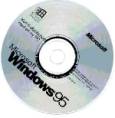
In the fall of 1995 Microsoft
Network launches Microsoft's online service.
The service touts specially developed Web "shows," but users prove more interested in surfing the Internet than in perusing Microsoft's content. The service is later reinvented as an Internet Service Provider (ISP). (10)
Network Solutions protects trademarks.

Network Solutions refuses to register copyrighted names as URL's to parties who do not hold the copyright. Domain name pirates had been registering corporation names, then trying to sell them back to the company. (10)
The Wall Street Journal launches
site
The Wall Street Journal launches a Web site called Money and Investing Update. The site, which provides frequently updated business news and statistics, is the Journal's first step toward launching its popular interactive edition, which becomes one of the few Web publications to successfully charge a subscription fee. (10)
RealAudio launched.
RealNetworks launches the popular RealAudio streaming audio program. The launch of streaming technologies on the Web promises to give users faster access to audio and video. Microsoft buys 10 percent of the company in 1997 and agrees to support RealAudio in its Internet Explorer browser. (10)

picture: courtesy der Standard
21
January, the Austrian newspaper "Der Standard"(5)
is the first to publish her paper on the web. (8)
May, Sun develops
Java
 |
Sun Microsystems develops Java, a platform-independent programming language. Because Java programs can theoretically run on any operating system, the language has the potential to dethrone Microsoft Windows 95. Sun and Microsoft lock horns over Java several times in the next few years: Microsoft licenses the technology, but Sun alleges the company has developed its own version that makes programs run better in conjunction with Microsoft software. (10) “Duke” is the first applet. Javascript was created to make Web programming accessible to non-Java programmers. It was originally called LiveScript. |
April, Time Warner
sells ads on Pathfinder
Time Warner becomes one of the first companies to sell advertising on the Web when it offers space on its Pathfinder site. Sponsors like AT&T and General Motors Corp. pay $30,000 a quarter to advertise. Although initial ads are met with criticism by the Web counterculture, Internet advertising soon becomes a multimillion-dollar industry. (10)
September, Amazon.com sells its
first book

Amazon.com sells its first book online. By 1996, the site is attracting more than 2,000 visitors a day. By 1997, that number will increase to 50,000 a day. From $511,000 in 1995, sales will grow to some $147 million in 1997. The company will go public in 1997 at eighteen dollars, and by the summer of 1999, stock will be selling for more than $100 a share. (10)
December, Bill Gates embraces
the Web
Bill Gates announces that Microsoft will shift its entire business focus to the Internet. He says Miscrosoft Network (MSN), the company's newly launched online service, will move all of its content to the Web. Despite the company's ambitious content plans, many of its Web content ventures are scrapped just a few years later. (10)
December,
AltaVista launches online Web database.

The search engine is developed at Digital Equipment Corp.'s (DEC) research laboratory. Compaq Computer Corp. acquires AltaVista in 1998 when it buys DEC but later sells a majority interest to venture capital firm CMGI, Inc.. (10)
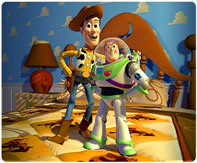
Toy Story is the
first full-length feature film to be completely computer generated.(1)
picture courtesy DisneyThe actual hard work is done by the Pixar studio's.
ALICE (Artificial Linguistic
Internet Computer Entity) is developed by Richard Wallace.
ALLICE is the kernel of many seemingly intelligent Chatbots. One of the occurences can be found in Intellibuddy. You can find other versions of ALICE all over the web; the software is free.
 read more on Artificial
intelligence
read more on Artificial
intelligence
Extrapolating from developments
on the density of memory compared to Kb per dollar is like foretelling the future
from the proverbial chickenbones.
But looking back in history: one megabyte of memory in 1985 would have cost you about $400. Now in 1995, that Mb cost about $35. And in 2005 the same megabyte will cost you $2.5, prices are actual for the particular year. You might conclude that memory makers will eventually have to start paying you. Like packaging a scanner while buying a printer.

Footnotes & References