A small introduction to this timeline.


Centuries ago knowledge traveled with caravans between India to an area what we now call Middle East and back. It were mathematicians (called philosophers) that traveled along and passed the knowledge to people at their destination. Sometimes they were even invited to come over and amuse a king or other rulers in Mesopotamia, Turkey, Egypt, India and China. The same thing happened at courts in Europe, centuries later. Mostly they stayed several years at a king's court and it was no exception that they changed courts from one king to another thousands of miles away. Yet this is how scientists passed the science or knowledge they possessed.
In this and the following chapters the same sort of events will occur in different time epochs. Also observe that once an artifact is mentioned, there must have taken place a considerable technological evolution before the artifact became what is has become when first mentioned. So when we mention a date it must have been sometimes eons back in the past when developments began. How many false starts were made before the end product came to fruition, there is no way to tell.
Prehistoric Era 15,000,000,000 BC - 409 BC This chapter deals with the era that human kind learned to count, supported by objects like bones and pebbles. It took tens of thousands of years for human kind to come to the more philosophical concepts of numeric systems, the zero and mathematical methods. What we will read here is that numeric systems were invented all over the world in different ages and that the need for numbers expanded throughout all layers of society. Most means were invented out of necessity, sometime by accident some times because they were needed. |
pre history | antiquity | pre
industrial era | industrial era
0000
- 469 - 1310
| Related Articles | |
| Tallies
and Technologies by David Birch |
|
 buy our CD for easier off line browsing |
|
| Related Resources | |
pre history |
|
 The Universal
computer boots up with a Big Bang, everything that was has now become or will
be.
The Universal
computer boots up with a Big Bang, everything that was has now become or will
be.
However, every time scientists discover new phenomena or get new instruments and new mathematical knowledge the age of the universe will again be in dispute.
In the beginning,
mankind may not have had any idea of numerical units.
Possessions had to be portable, since they had to be carried around. Everything that could not be carried, was left behind. People had to be quick in movement and reaction; being slow meant instant death.
Animals were not the stuffy types we keep in zoos nowadays. They were bigger, fast as lightning and regarded a human just as another piece of juicy meat. And there were no gates or anything to keep them back. Reasons for humans tended not to carry too much around for their own safety. One could safely say that the need to count or calculate was not present since possessions were scarce and little.
But when mankind started to settle they began gathering possessions. They surely could tell you that there were less or more objects of, let's say, apples when apples were added or taken away. Could one presume that they were visualizing the form (pile of apples) and estimated the size, to have an idea of quantities? Was their way to tell something was missing or added through observing that the form of the pile had changed? When the pile of apples had become bigger, some apples were added. The bigger the image they had in memory the more they had. Or at least this seems to be a logical explanation of humans interfacing with their environment. As time progressed, people migrated from a nomadic hunter-gatherer lifestyle into a domestic lifestyle. Occupied pieces of land and started farming. Hunting still took place but out from a permanent camp site. The number of humans grew and they specialized in professions: shoemakers, farmers, blacksmiths. In time wealth and other things started to accumulate and volumes became larger. Methods of visualizing quantities are of course very subjective, the need for better means of telling quantities and at the same time keeping track of them, increased. And as always the means were invented or improved upon when needed.
The first
tools used for calculation aids were almost certainly man's own fingers, and
it is no coincidence that the Latin word "digit" is used
to refer to a finger (or toe) as well as a numerical quantity.
As the needed to represent larger numbers grows, early man employed readily available materials for the purpose. Small stones or pebbles were used to represent larger numbers than fingers and toes, that had the added advantage of easily storing intermediate results for later use. Thus, it is no coincidence that the word "calculate" was derived from the Latin word for pebble: calculus.

 see
also:
tally sticks
see
also:
tally sticks
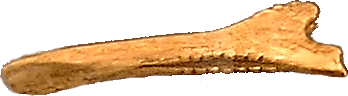
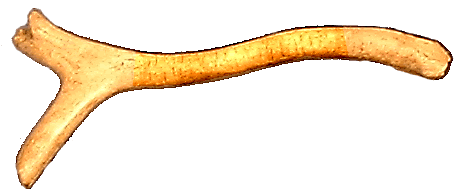
The oldest
known objects used to represent numbers were bones with notches carved into
them, see picture above.
These bones, which were discovered in western Europe, date from the Aurignacian period 20,000 to 30,000 years ago and correspond to the first appearance of Cro-Magnon man. (Named "Cro-Magnon" after the caves of the same name in Southern France, in which the first skeletons of this race was found in 1868.). Of special interest is a wolf's jawbone more than 20,000 years old with fifty-five notches in groups of five, which was discovered in Czechoslovakia in 1937. This is the first evidence of the tally system, which is still used occasionally to the present day and could therefore qualify as one of the most enduring of human inventions.
Also of interest
was a piece of bone dating from around 8,500 BC, discovered in Africa, that
appeared to have notches representing the prime numbers 11, 13, 17, and 19.
Prime numbers are those numbers that are only wholly divisible by the number one and themselves, so it is not surprising that early man would have attributed them with a special significance. Surprising was that someone of that era had the mathematical sophistication to recognize this quite advanced concept and took the trouble to write it down -- not the least because prime numbers had little relevance to everyday problems of gathering food and staying alive.
Many artifacts
are found that support the idea that mankind used very different means to keep
track of numerical data, amounts, numbers and possessions. These artifacts are
sometimes tens of thousands of years old.
|
|
|
||||||||||
|
cuneiform app 4000-1200bc |
|
||||||||||
|
|
|||||||||||
 Napier bones |
|||||||||||
| More details can be found in the various sections; just click the hyperlink and use the back button of your browser to return here. | |||||||||||
 |
|
|
|
|
|
|
|
|
|
|
|
So far for the artifacts. Yes, they were helpful. But as the quality of life improved, in different parts of the world people started to question themselves and wondered if there was more behind the clouds. And the need for knowledge grew. Scientists of all breeds and colors stepped forward and came with many new findings, inventions and facts of life.
In the Indian
Vedah compiled at least before 6000 BC a verse (Richa) mentions the numerals
of 12 (dwawash), 2 (treemi), and 300 (trishat).
That was one of the earliest recordings of a decimal numeral system. The use of the zero also proved that a 10 based positional numeric system was in use at that time.
It is open to speculation how long before this date the decimal system, inclusive the zero, was invented.
And, it still leaves us with the question: "who or what people invented the zero?".Also note: around 600AD the first recorded instance of calculations with a zero appeared.
Ishango bone
type of tally stick in use. (19)

Mathematics
in Egypt is based on the fractional system.
A fine illustration of this is found in the eye of Horus. An egyptian deity of this time. The fractional units were used to represent the fractions of hekat (appr. 4.8 liters), the unit measure of capacity for grains. (17)(18) see http://www.greatscott.com/hiero/eye.html for a great explanation on this form of mathematics.
See also below at 1850 BC for a riddle in this type of calculus

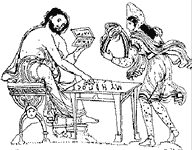
The
Abax (latin), or Abaq (Sumeric), giving the general idea
of an Algorithmic Unit (1)(ALU)
of a computer, is coming in use in the far east. Abaq or Abax stands for dust.
Thus using the Abax or Abaq meant writing in dust.
The Abax serves as a means to calculate, it is a flat stone or wooden tabletop in which are carved straight lines. Calculations are done using little pebbles, and it is assumed that the various pebbles represent different values. In much later times (approximately 800 AD), the Abax showed up in Europe.
Inhabitants
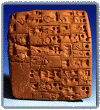
of the first known civilization in Sumer keep records of commercial transactions
on clay tablets. (20)
The first
human to actually record numbers in a storage medium may have been a Sumerian
accountant.
He lived somewhere in the lower Mesopotamian river valley about 3200 BC using the sexagesimal numbering system based on the numbers 6 and 10. The discovery of arithmetic brought the Sumerian tangible benefits including the ability to numerically model the products of their economy, and their commerce grew making Mesopotamia the creator of Western civilization.(3)
Positional
number system used in Mesopotamia.(5)

Early form
of beads on wires, used in China(13)
The Abacus
is described for the first time in Babylon.
An improved version is coming into use around 1300 BC and is still in use now on the Balkan and Asia.
Just to show how well the abacus is keeping up: in app. 1950 AD, a contest between man and machine took place and a well trained human still beat the fastest electronic computer of that day by doing arithmetic on his Abacus.
In
3000BC the Hindus culture flourished and large numbers were used (inscriptions).
(22)
The Egyptians
came up with the idea of a thinking machine.
Citizens went to the "Oracles": statues in which priests were hidden who communicated via orifices with the people putting questions to the oracles. This idea was copied in the 18th century when a smart designer hid a chess player in a so-called "automatic chess playing machine".
do you want to know
?
Babylonians
use the abacus and approximate pi as 3 1/8.
Chinese writing
system is developed. It was codified around 1500 BC(16)
From
the middle of 2000BC Indo-European tribes were making their way from the N.
W. towards India.
They introduced Sanskrit - earliest knowledge of maths dates from this time.(22)
Stonehenge
is still a mystery today. Was it a calendar or "just" a place for
spiritual events? Do you want to know more? www.pbs.org
In
the Rhind(8) Papyrus written by, or copied as he states himself,
the Egyptian scribe Ahmes stated that p = 256/81 app. 3.160…(5) The scroll was purchased
in Egypt by the Egyptologist Rhind in 1858 and is now in the British museum
of Art.
This scroll contained more than a definition of PI. The Ahmes papyrus contained a set of 84 mathematical problems and their solutions. Although no hint is given how these solutions were arrived at, it gave us an insight into the mathematical knowledge of the early Egyptians.(9)
The Rhind papyrus showed that early Egyptian mathematics was largely based on puzzle type problems. For example the papyrus contained the following puzzle.
Seven houses contain seven cats. Each cat kills seven mice. Each mouse had eaten seven ears of grain. Each ear of grain would have produced seven hekats of wheat. What is the total of all of these?(7)
with the information above at 5500BC you should be able to calculate this
A well developed
additive number system is now in use in Egypt(5)
The first Water
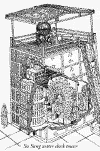
clock known is possibly constructed in Egypt.
One of the oldest was found in the tomb of Amenhotep I, buried around 1500 B.C. Others were built in China (1086 by Su Sung, a working model can be seen in action in Manor Museum UK), Korea (architect: Chang Yeong Shil, 1438, can still be seen at Kyeong Bok Gung.), and in Syria (700 BC). Greece (ca. 5th century BC ) Some examples are shown below.
Time and tracking time was something that intrigued people and would inspire many inventors throughout the centuries into creating all kinds of clocks. In the 17th century a water driven clock, the first with hands and all, was constructed. And in 1989 a modern water clock was created by French physicist and artist Bernard Gitton and placed in the children's museum(14). Water clocks are now mainly used for exploratoria in museums and other than time keeping purposes. In the first place it was the clock technology would be used to make calculators of many different shapes. These kind of calculators were made until far into the 20th century. Secondly clocks were used to time the celestial bodies and promoted the use of algebra and geometry, in other words mathematics. Both factors contributed to the development of science as we know it today.
The Chinese
use of a precision of one decimal is registered.
In that the Chinese were calculating beyond the precision of whole numbers and started to divide the numbers in parts e.g. fractions.(15)
Direct evidence
exists as to the Chinese using a positional number system. (19)
I-Chin exhibits
binary properties.(5)
In this century
Pythagoras rediscovered the theorem: the sum of the squares of the sides of
a right triangle equals the square of the hypotenuse.
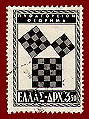

The so-called Pythagorean triples were already known in Babylonian times(2)
Abacus used
in Greece(5)
Major developments
start to take place in Chinese arithmetic. (19)
Pythagoras
is credited for a theorem known to the Chinese a thousand years earlier.
When his student Hippasus rediscovered irrational numbers, Pythagoras, believing the universe to be strictly rational, acts contrarily and has the student drowned for heresy.(5)(6)
The
first known description of a binary numeral system was made by Pingala
He is the author of the chandah-shastra, the sanskrit book on meters, or long syllables. While Pingala's system uses the symbols 1 and 2, Leibnitz (17th c.) uses 0 and 1, like the modern binary numeral system.
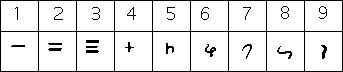
Buddhist
inscriptions from around 300 B.C. use symbols that will become the 1, 4 and
6 as in use since the 16th century.
One century later, their use of the symbols which will be 2, 4, 6, 7 and 9 will be recorded. The numerals migrate through Persia, now known as Iraq, to Egypt and Italy. Only to be generally accepted late in the 8th beginning of 9th century in de Middle East region. In Europe it takes a little longer. Only when Fibonacci uses the Arab numerals in his treatise acceptance begins. Not before the 16th century the new numerals will be generally accepted in the West.
pictures and main text for this entry courtesy wikipedia (21)
This
Babylonian Salamis tablet, the oldest surviving counting board, wil be discovered
in 1846 on the island of Salamis near Greece.
Salamis calculating board appr 300 BCThe gaming boards used by cultures like the Babylonians and Romans are seen as the "prototypes" of the Abacus. As most counting boards during this period of time, this Salamis board may most likely have been used for other activities than accounting, e.g. gaming. The board is ~150 x ~75 x ~4.5 cm (1 inch = 2.54 cm) and made of marble. Parallel grooves and Greek symbols are carved into it; with just four grooves it is possible to add and subtract to 10,000. The counting method used here is bi-quinary. (24)
Ctesibius (285 - 222 BC) invents an automata to represent a whistling clock, a variant on the clepsydra with pneumatics as the power source.
Due to a fire burning down the library of Alexandria all his designs and record will be lost. There is little left of Ctesibius' work, apart from a mysterious tower in Greece. It will take mechanical engineers (e.g. Cristiaan Huygens) over 1800 years to surpass Ctesibius' precision with this water clock.

|
Last Updated on
October 5, 2006
| For suggestions please mail the editors |
Footnotes & References